
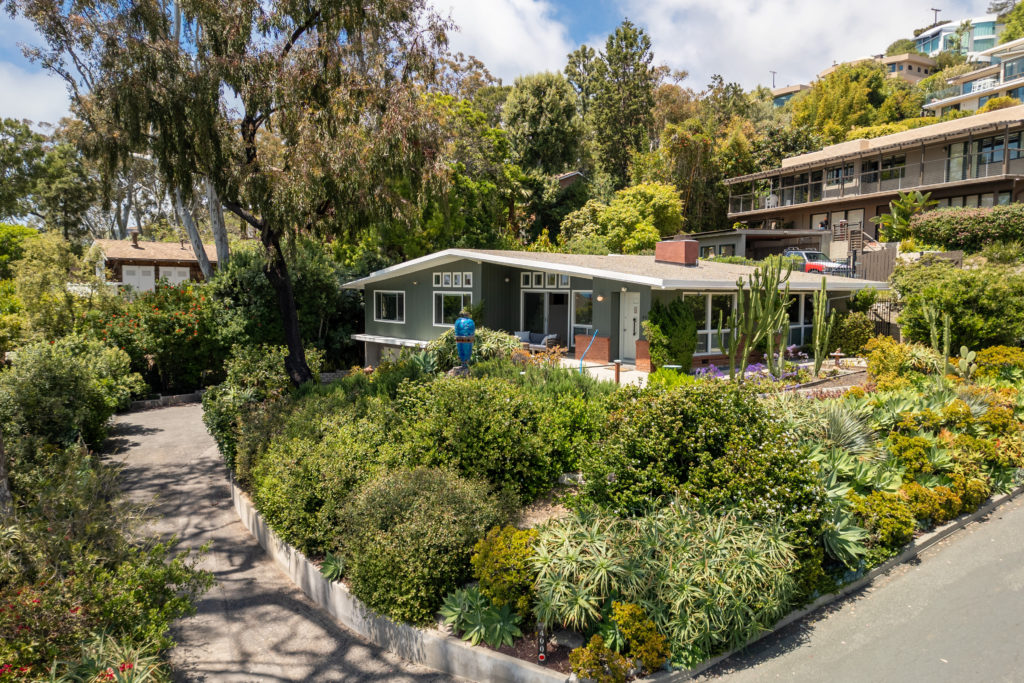
All year the FAIR Plan increase was going to happen. On October 15 it happened.
If you’re buying or selling anything backed up against open space in this county — the Laguna canyons, the hillsides above Dana Point and San Clemente, the edges of Laguna Niguel and San Juan Capistrano — this stopped being a headline and became a line item in your file.
What actually changed
The California FAIR Plan — the state’s insurer of last resort, not a public program and not free — raised residential rates an average of 29.1%, effective October 15, 2026. It had asked the Department of Insurance for 35.8%.
The scale is the part people miss. The FAIR Plan now covers more than 675,000 policyholders with roughly $768 billion in exposure as of June 2026 — up about 250% since September 2022. A June 2026 Stanford study put its share near 5% of California homes. This is no longer a niche product for a few ridgeline houses.
Karl Susman, an insurance broker widely quoted on the increase, put it without spin: “It’s definitely going to cause pain for some people.”
“Average” is the word to distrust
29.1% is a pooled statewide number. It is not your number.
Reporting on the filing has been consistent: homeowners in the highest wildfire-risk areas can see their wildfire premium roughly double, while policyholders in lower-risk urban pockets may see a reduction.
What decides your side of that average is your fire hazard severity zone, your access, your roof, your vents, and the fifty feet around your foundation. The Orange County Fire Authority publishes this county’s hazard severity zone maps, and your parcel’s designation is the first thing an underwriter looks up. Know yours before you’re under contract.
It’s two policies, not one — and that surprises almost every buyer
This one has nothing to do with the rate increase, and it catches almost everybody.
A FAIR Plan policy is basic fire coverage. That’s it. For water damage, liability, theft and the rest, you buy a separate Difference in Conditions (DIC) policy through a broker and stack it on top. Two policies, two premiums, two renewal dates.
So when someone tells you “the FAIR Plan quote came in at X,” ask whether X includes the DIC. Often it doesn’t, and the real annual cost is meaningfully higher.
There is legislation aimed at this — AB 1680, the Make It FAIR Act, authored by Assemblymember Lisa Calderon and sponsored by Commissioner Ricardo Lara, would require the FAIR Plan to offer a fuller homeowners policy instead of forcing that second purchase. Lara said it “turns years of our work into enforceable requirements.” It is a bill, not law. Underwrite on today’s rules.
It doesn’t just hit your budget. It hits your approval.
Your homeowners premium is part of your housing payment, which makes it part of your debt-to-income ratio — not a side expense you absorb after closing.
Run it. A premium landing $4,000 a year above what you penciled in is $333 a month of qualifying income gone. At today’s 7.40% thirty-year rate, $333 a month supports roughly $48,000 of loan. Against the county’s $1,440,000 median closed single-family price in the October 12 Orange County Housing Report, an insurance surprise can move your approval by the price of a renovated bathroom — or push a tight file out of qualification entirely.
That’s why “we’ll sort out insurance later” is the most expensive sentence in a canyon escrow.
Sequence it like this
Buying. Get a real all-in quote — FAIR Plan plus DIC — while your investigation contingency is still in place. That contingency covers insurability, not just condition, and insurability is exactly what’s in question here. Your lender needs evidence of insurance before it funds, and a stacked policy takes longer to assemble than a single standard one. Starting on day 15 of a 17-day clock is how people end up needing extensions.
Selling. Quote your own house before it goes live. In a mapped hazard zone, assume a buyer finds the premium around day ten and comes back at you with it. I would far rather hand them that number on day one, with your hardening work documented, than defend it in a renegotiation.
The way out is real, and it’s getting better
Don’t read the FAIR Plan as permanent. It publishes a wildfire-hardening discount schedule, and the mitigation that earns those credits — ember-resistant vents, a Class A roof, clearance around the structure — is the same work that gets you quoted by a regular carrier later.
And the regular market is coming back. The Department of Insurance reported earlier this year that Travelers committed to expanding homeowners availability and AAA Southern California filed to grow its coverage, with six of the state’s ten largest home insurance groups now committed to staying and growing here. FAIR Plan growth slowed sharply in step — roughly 16,000 residential policies added in the first quarter of 2026, about 2.4%, against 35,000 to 50,000 per quarter through 2024 and most of 2025.
Your insurance broker is the right person to shop the policy and tell you what hardening earns which credit. My job is the real estate side: whether the premium changes what this house is worth, how it’s handled in your contract, and what it does to your timeline.
Call me before the quote comes in, not after.
Buying in a canyon or hillside neighborhood? My Orange County Buyer’s Guide walks the whole process, including how insurance and contingencies fit together.
Selling one? Start with my Orange County Seller’s Guide, or get a free, no-obligation home valuation so we’re working from a real number.
Jaleesa Peluso | Berkshire Hathaway HomeServices California Properties
Phone: (949) 395-0960 | Book a call: calendly.com/jaleesapeluso | JaleesaPeluso.com
DRE #01935097